
The Tucson Homebuyer's Guide to Architectural Styles
What architectural styles will you actually see house hunting in Tucson? Southwest Adobe, Victorian, Craftsman Bungalow, Spanish and Mediterranean Revival, Ranch, Mid Century Modern, Contemporary, and Townhouse are the styles that make up Tucson's real housing stock, each with its own era, price range, and maintenance profile.
Tucson isn't a cookie cutter town. Drive through a handful of neighborhoods and you'll pass thick walled adobe row houses, gingerbread trimmed Victorians, sun baked ranch houses, glassy mid century gems, and brand new desert modern builds, sometimes all on the same street. Knowing what you're looking at helps you shop smarter, budget for the right kind of maintenance, and fall in love with a house for reasons you can actually explain to your agent.
I'm Jon Harned with EPIQUE Realty, and this guide walks through the styles you'll genuinely encounter house hunting in Tucson: what they look like from the curb, what era they came from, what living inside is really like, what most owners eventually update, and roughly where they land on price. A few styles that show up in national buyer guides, Colonial, Cape Cod, Tudor, Georgian, Federal, Coastal, Plantation, A Frame, Log Home, French Country, and traditional or modern Farmhouse, just aren't part of Tucson's real housing stock in any meaningful way, so they're left out here.
As of mid 2026, Tucson's citywide median sale price sits around $320,000 to $326,000 according to Redfin and Zillow, with Long Realty pegging the broader Tucson and Southern Arizona median at $365,000 as of mid 2025. The Catalina Foothills area runs closer to a $690,000 median. Keep those numbers in mind as a yardstick as you read the price notes below, since in Tucson, neighborhood and lot usually matter more to price than style alone.
Southwest Adobe: Sonoran, Territorial, and Pueblo Revival
Also called Sonoran, Sonoran row house, adobe, historic adobe, Barrio adobe, Territorial, Territorial Revival, Pueblo Revival, or Santa Fe style.
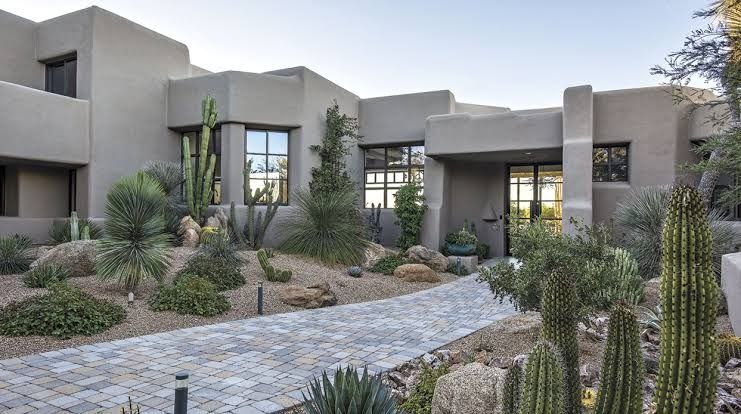
What you'll see from the street
This is the style that's actually native to Tucson, and you won't find it done quite this way anywhere else. The classic version is a one story house built right up against the sidewalk, with little or no front yard, made of thick mud adobe, sometimes exposed, sometimes coated in colorful plaster or stucco. The roof is flat, hidden behind a low parapet wall, often with a small spout called a canale poking through to drain rain off the roof. Doors are heavy wood, set deep into the thick walls, and windows are narrow. Life happens behind the house, in a private courtyard garden, not out front. After the railroad arrived in 1880, some of these got Americanized, picking up pitched metal roofs and Victorian trim, locally called Transformed Sonoran. A related cousin, Pueblo Revival, borrows the same flat roof and parapet look but adds rounded, sculpted edges and thick projecting roof beams called vigas, giving houses a soft, hand built, Santa Fe feel.
When it was popular
The true adobe row houses date to the 1840s through 1890s, back when Tucson was laid out more like a Mexican town, with buildings hugging the street and courtyards tucked behind. Pueblo Revival had its heyday in the romantic 1920s through 1940s subdivisions, and both got a nostalgic revival again in the 1955 to 1965 postwar building boom. Barrio Viejo, near downtown, holds what's described as the largest collection of nineteenth century adobe buildings in the country. Look for this style in Barrio Viejo, Barrio Anita, El Hoyo, El Membrillo, Santa Rosa, El Presidio, and Dunbar Spring, plus Pueblo Revival touches sprinkled through El Encanto Estates and El Montevideo.
Inside the house
These homes weren't built with open floor plans in mind, so expect distinct, separate rooms rather than one big great room, unless a past owner has already opened things up. Ceilings are tall, which helps hot air rise away from where you're standing. A central hallway called a zaguan often channels a breeze from the back courtyard through the house. Those thick walls mean deep window ledges, quiet interiors, and a house that stays cooler through a hot afternoon. Original floors were often earthen; most renovated homes now have polished concrete or wood.
What owners typically update
Careful adobe and mud plaster repair, which is specialty work often pricier than regular stucco patching, flat roof membrane maintenance, gut renovated kitchens and baths while keeping the thick walls and courtyard intact, and AC additions tucked out of street view in historic districts. Many owners repair and weatherstrip original windows rather than replacing them outright. If the home qualifies, Arizona's State Historic Property Tax program can meaningfully cut the tax bill.
Price context in Tucson
This is a premium, scarce niche. Restored Barrio Viejo and El Presidio adobes have recently listed anywhere from roughly $500,000 for a smaller restored unit up to $1.3 to $1.75 million for larger compounds, well above the citywide median. A fixer upper adobe that needs work can land closer to the middle of the market, but a move in ready historic adobe behaves more like a lifestyle purchase than a starter home.
Victorian and Queen Anne
Also called Victorian or Queen Anne Revival; often keeps company with Neoclassical and Greek Revival neighbors in the same historic pockets.
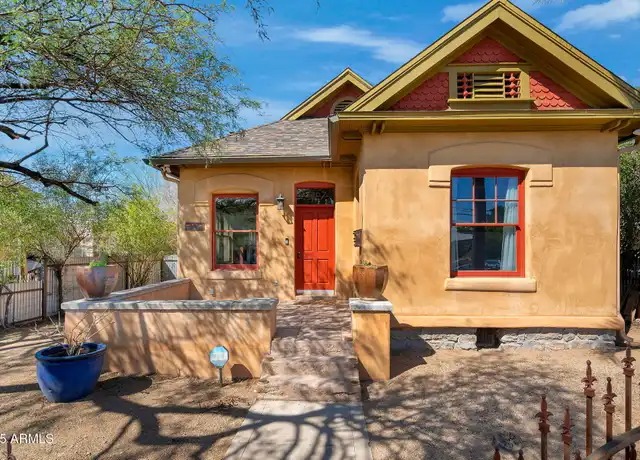
What you'll see from the street
This is the Eastern seaboard came to the desert look. Picture a steep, busy roofline with multiple gables, sometimes a turret, bay windows catching the light, a prominent chimney, and a wraparound porch dressed up with decorative wood trim. These are wood or masonry houses, not adobe, a real contrast to Tucson's native building style, and a visible sign of the wealth and Eastern taste that arrived with the railroad. Some neighbors on the same block go for a more formal, symmetrical look with tall columns and a classical porch instead of Victorian gingerbread.
When it was popular
Roughly 1880 to 1910, once the railroad made lumber and pattern book house plans easy to bring in. Armory Park, Tucson's first residential National Register historic district just south of downtown, is the place to see this look at its best, alongside Territorial and Greek Revival neighbors. Smaller pockets also show up in Pie Allen and Iron Horse.
Inside the house
Expect a formal, room by room layout, a parlor, a separate dining room, a distinct kitchen, rather than today's open concept. Ceilings tend to run higher than a lot of postwar houses, and better examples have real decorative millwork and pocket doors. Larger homes have a staircase to a second floor; turret rooms create quirky, oddly shaped spaces that some buyers adore and others eventually remodel. Basements are rare in Tucson's Victorians.
What owners typically update
Full kitchen and bath remodels that keep the original millwork and fireplaces, electrical, plumbing, and insulation modernization since these were built long before central AC, porch repairs, and historically appropriate paint schemes. Because many sit in a historic district, exterior changes usually go through design review.
Price context in Tucson
These sit in Tucson's most walkable, desirable central historic districts, so they typically price above the city median, and the very best examples go well beyond that. A fully restored large Armory Park showplace has been marketed near $2 million, while a mid size renovated Victorian more commonly lands in the high to mid market or lower luxury range. District and condition matter more than the Victorian label alone.
Craftsman and Bungalow
Also called Craftsman Bungalow, Bungalow, or Western Stick, a version with exposed structural beams and Japanese influenced joinery; buyers sometimes just call the smaller ones cottages.
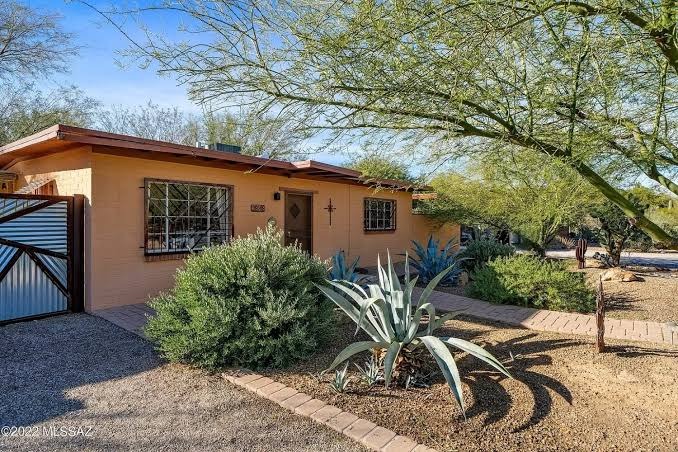
What you'll see from the street
Low and cozy, usually one story, occasionally a story and a half, sitting a little above ground level. The signature move is a broad front porch held up by short, thick, tapered columns on stone or brick piers, practically inviting you to sit down. Roofs are gabled with wide, overhanging eaves and exposed rafter tails peeking out underneath. Windows are classic double hung wood sashes. Materials run to brick, wood siding, stucco, or, later in the era, burnt adobe.
When it was popular
1905 to 1930, right alongside the early growth of the University of Arizona and Tucson's first streetcar suburbs. West University is the flagship neighborhood, of its more than 700 historic buildings, roughly half are Craftsman Bungalows. Sam Hughes, Feldman's, Jefferson Park, Rincon Heights, and Menlo Park all have strong bungalow pockets too.
Inside the house
Efficient, modest footprints where the living room often opens right toward the porch. Nicer examples have built in bookcases and breakfast nooks, a hallmark of the Craftsman era's love of thoughtful woodwork. Kitchens were originally closed off; most buyers today open them up to the living space. Hardwood floors and simple brick or tile fireplace surrounds are common, and ceilings sit at a comfortable moderate height, not soaring, not low.
What owners typically update
Opening the kitchen to the dining and living areas, expanding a single small bathroom, careful porch conversions since historic rules can apply, attic insulation, and electrical and HVAC modernization. On bigger UA area lots, adding a casita or accessory dwelling is a popular move.
Price context in Tucson
Highly location driven. Bungalows in West University and Sam Hughes, walkable, central, and prized, often price above the city median, with well updated larger examples in Sam Hughes reaching well over $800,000 to $1 million. Smaller or less updated bungalows elsewhere can sit closer to the middle of the market. Bottom line: typically mid to high tier, with the best examples landing in luxury territory when location and renovation line up.
Mediterranean and Spanish Revival
Also called Spanish Colonial Revival, Spanish Eclectic, Mission Revival, or Mediterranean Revival; agents often just say Spanish or Mediterranean. If you hear Joesler style, that's a name drop worth paying attention to, it refers to Josias Joesler, the architect who shaped much of Tucson's romantic Spanish and Pueblo look starting in the late 1920s, and it signals something special rather than an ordinary tract house.
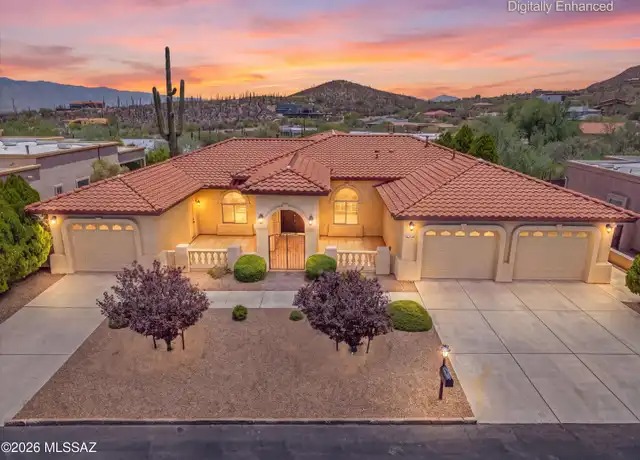
What you'll see from the street
This is a whole family of related romantic Southwest looks, and Tucson has all of them. Spanish Colonial and Spanish Eclectic homes wear smooth stucco walls with red clay tile roofs, or a flat roof dressed up with a small tiled entry gable, arched doorways and windows, and wrought iron balcony rails and window grilles, usually arranged asymmetrically around a courtyard. Mission Revival houses are simpler, white stucco, red tile, and a distinctive curved parapet that echoes an old mission church. Mediterranean Revival tends to go two stories, with a low, hipped red tile roof, towers, and small paned windows. Monterey homes are also two stories, with a full width second floor balcony held up by square wood posts, very recognizable once you've spotted one.
When it was popular
The 1920s were the golden era, when developers actively marketed romantic Southwest living to affluent buyers in new curving street subdivisions. Sam Hughes, Colonia Solana, El Encanto Estates, El Montevideo, Blenman Elm, and Catalina Foothills Estates, much of it Joesler's work, are the neighborhoods to know. The style never really left, you'll still see plenty of Spanish or Mediterranean flavored production homes in newer subdivisions built from the 1990s through today.
Inside the house
Historic examples are often organized around a courtyard, breezeway, or patio, blending formal rooms with real indoor outdoor living. Joesler's own houses are known for hand hewn wood beams, hand troweled plaster, colored concrete floors, and decorative ironwork. Look for exposed ceiling beams and arched interior openings in the nicer historic homes. Newer Spanish or Mediterranean tract homes are more straightforward: an open living, dining, and kitchen area facing a rear patio.
What owners typically update
Kitchen and bath remodels, done carefully around load bearing masonry walls, clay tile roof repair, expensive but it's the whole character of the house, courtyard landscaping swapped to low water desert plants, pools, and restoring original steel or wood window frames.
Price context in Tucson
This category has the widest price spread of any style here, because the look shows up at every price point. A modest Spanish Eclectic bungalow in the central grid might price near or just above the median. A production Spanish Mediterranean house in a suburban master planned community is often solidly mid market family housing. But an architect pedigreed Joesler home in El Encanto, Colonia Solana, or the Foothills is a different animal entirely, high luxury, often well above the Foothills' roughly $690,000 median. The rule of thumb: a Spanish looking house can be ordinary or extraordinary, location and pedigree decide which.
Ranch
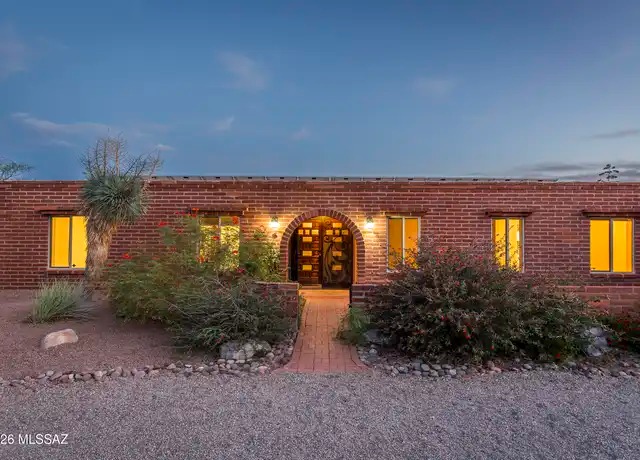
Also called Modern Ranch, Classic Ranch, burnt adobe ranch, or Territorial Ranch, a flat roofed, parapet topped version, and Postwar Pueblo, Ranch bones with decorative vigas. In Winterhaven you'll hear Traditional, Modern, Minimal, and Transverse Ranch subtypes.
What you'll see from the street
This is Tucson's workhorse style, the house you'll actually end up buying more often than not. It's long, low, and horizontal, usually set back from the street with a rectangular or L or U shaped footprint. Materials are typically burnt adobe brick, regular brick, or stuccoed block. Roofs are low pitched gables or hips, or flat with a parapet on Territorial Ranch versions. The garage or carport is tucked under the main roofline rather than sitting off to the side, and big picture windows plus sliding glass doors to the backyard are classic Ranch signatures.
When it was popular
The Ranch took over as Tucson's default house style after World War II, roughly 1935 to 1975 nationally, with Tucson's postwar population boom cementing it locally. You'll find it everywhere: Winterhaven, with about 265 Modern Ranch examples, Catalina Vista, Broadmoor, San Rafael Estates, a showcase of burnt adobe ranches with carports and ribbon windows, Blenman Elm, Jefferson Park, Casas Adobes, and huge swaths of the eastside and northwest suburbs.
Inside the house
Originally laid out with the living room, dining area, and kitchen strung along in a line or an L, and bedrooms grouped in a separate wing, more open than a Victorian, but not as open as a brand new great room. Everything is on one level, which is a real plus for accessibility, and sliding glass doors usually connect the main living space to a covered patio out back. A lot of original 1950s and 60s Ranch kitchens and hall bathrooms are still waiting for their first real remodel, so budget for that if the house hasn't been updated.
What owners typically update
Opening the kitchen to the living and dining space, the single most common Ranch renovation in Tucson, expanding the primary bathroom, converting a carport into a garage or casita, swapping single pane windows for dual pane, replacing evaporative coolers with real air conditioning, and trading grass lawns for desert landscaping. Winterhaven is a deliberate exception, keeping its Midwestern green look.
Price context in Tucson
This is the statistical middle of the market. A recent Redfin snapshot of ranch tagged listings showed a median list price of about $343,000, right in line with the citywide median. Entry level ranches on the east and south sides can dip into the high $200Ks; updated central or Foothills adjacent burnt adobe ranches often run $450,000 to $800,000 or more; and custom large lot desert ranches can climb into luxury territory. In short: the reliable middle, with long tails at both ends.
Mid Century Modern
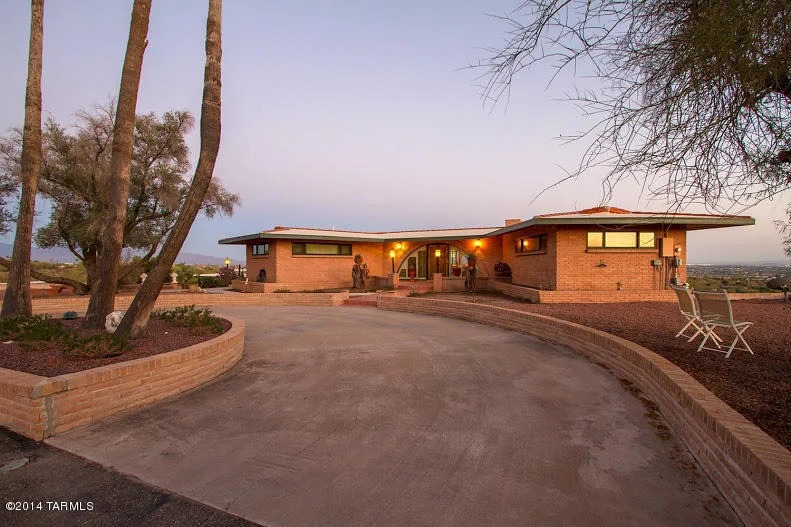
Also called MCM, mid century, or desert modern; was originally just marketed as Contemporary when it was new, worth remembering when you're comparing listing descriptions.
What you'll see from the street
Strong horizontal lines, walls of brick, burnt adobe, or slump block mixed with big expanses of glass. Rooflines are more playful than a Ranch, a low front gable might combine with flat and shed roof sections, all under broad, deep overhangs that shade the glass below. Entry courtyards, low garden walls, and built in planters are common, and ornament is basically nonexistent, the materials and the structure itself are the decoration. The New York Times has called Tucson's mid century architecture an unsung architectural oasis, and locals tend to agree.
When it was popular
1950 to 1970, overlapping the tail end of the Ranch era. Look in Catalina Foothills mid century estates, Indian House, El Montevideo, notable work by architect Arthur T. Brown, Menlo Park, parts of Sam Hughes, and Casas Adobes.
Inside the house
Open or semi open living areas built around the idea of blurring the line between inside and outside, floor to ceiling glass facing a courtyard or a view, sometimes exposed post and beam construction, and clerestory windows that let light in high up without sacrificing privacy. Original kitchens were small by today's standards and have almost always been remodeled in any home that's actively for sale now.
What owners typically update
Period sensitive kitchen and bath overhauls, think terrazzo, walnut cabinetry, clean lined quartz, roof and insulation upgrades under those broad overhangs, glass replacement that keeps the original mullion pattern but performs better thermally, and careful restoration of carports and decorative screen block walls.
Price context in Tucson
A recent filter of MCM listings on Redfin showed roughly 20 homes with a median list price around $330,000, close to the citywide median, because that pool mixes modest homes and condos in with true architect pieces. Move into the Catalina Foothills, though, and renovated mid century homes commonly cluster in the $650,000 to $1,000,000 plus range. So: near median for an ordinary MCM, high to luxury for an architect designed Foothills example.
Contemporary and Modern
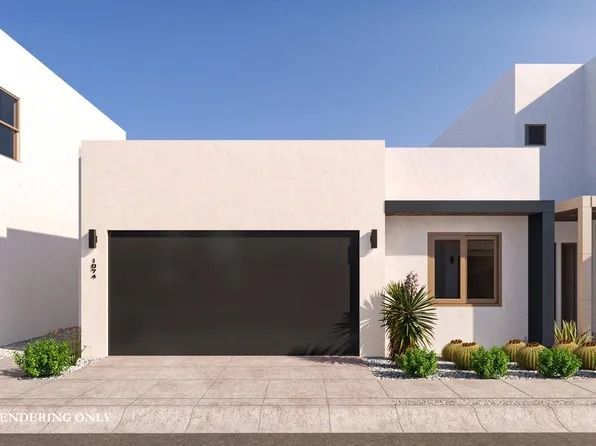
Also called Contemporary, Modern, so contemporary, modern desert, or transitional, common listing language; make sure to check the year built and photos, since Contemporary was also the original name for what we now call Mid Century Modern.
What you'll see from the street
Clean, geometric shapes, flat or very low slope roofs, and large expanses of glass. Materials lean toward stucco, steel, concrete, and stone in desert toned palettes, with an emphasis on views, privacy walls, and indoor outdoor living space. Downtown, this shows up as loft style condo exteriors. Fair warning: some production contemporary homes still wear a Spanish tile roof, the floor plan inside is what actually makes it contemporary, not just the roofline.
When it was popular
This is a living, ongoing style, a continuous thread from the mid century era through today's custom Foothills builds and downtown infill. The strongest concentration of design forward, luxury contemporary homes is in Catalina Foothills and canyon or view neighborhoods like Pima Canyon, along with newer westside and northwest modern communities.
Inside the house
Open great rooms, oversized kitchen islands, and multi panel sliding doors that open the whole back wall to a covered patio. Ceilings run higher, 10 to 12 feet or more, with fewer enclosed hallways than older styles. Flex rooms and home offices are standard in newer builds, and luxury examples often include full indoor outdoor kitchens.
What owners typically update
Newer homes mostly need smart home upgrades and landscaping maturity over time. Homes from the 1980s through 2000s builder contemporary era typically get kitchen and bath refreshes, added window shading or film on west facing glass, and roof coating. Because these homes lean heavily on glass, good overhangs and efficient windows matter a lot for keeping cooling costs in check.
Price context in Tucson
Production and soft contemporary homes in ordinary subdivisions sit near the citywide median to high mid market. True custom modern homes in the Foothills and canyon enclaves run dramatically higher, Pima Canyon's notable modern inventory has recently priced in the roughly $2 million to $5 million range. This style spans the widest range of any in this guide, from an everyday new construction home to the very top of the Tucson market.
Townhouse and Rowhome
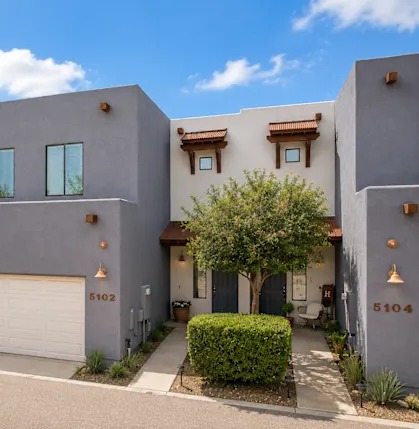
Also called Townhome, rowhouse, patio home, or cluster home, and this label actually covers two very different products in Tucson.
What you'll see from the street
There are two flavors here. The historic version is the Sonoran adobe row house described earlier, one story adobe units built flush to the street with no front yard, mostly found in Barrio Viejo and nearby barrios. The modern version is a 2 to 3 story attached home, usually stucco clad, sharing at least one wall with a neighbor, with a small private patio and shared HOA maintained common areas. The architectural dressing on modern townhomes varies widely, Spanish, contemporary, or generic Southwest.
When it was popular
The historic rowhouses date to the nineteenth century. Modern townhomes have been built continuously from the postwar era through today, with a strong concentration near the University of Arizona, downtown, and in HOA governed subdivisions across the city.
Inside the house
Historic rowhouses follow the same linear room, courtyard facing layout described in the Southwest Adobe section. Modern townhomes are usually vertical, garage on the ground floor, living space in the middle, bedrooms up top, or occasionally single story patio homes. You trade yard space for lower maintenance and HOA amenities.
What owners typically update
Historic rowhouses get the same adobe appropriate updates covered earlier, plus creative parking solutions. Modern townhomes typically see flooring and kitchen refreshes and HVAC upgrades; HOA rules usually limit what you can change on the outside.
Price context in Tucson
Modern townhomes frequently list in the high $200Ks to mid $300Ks, putting them squarely in starter to mid market territory, with upscale northwest or Foothills adjacent townhomes climbing toward $450,000 to $600,000 plus. Historic adobe rowhouses price like the rest of the Southwest Adobe category, often $500,000 to $1 million or more once restored. In short: modern townhomes are an approachable entry point; historic rowhouses are a premium lifestyle purchase.
Frequently asked questions
What's the most common architectural style in Tucson?
Ranch is Tucson's statistical middle of the market and its most widespread style, found across the eastside, northwest suburbs, and neighborhoods like Winterhaven, Catalina Vista, and Casas Adobes.
What does Joesler style mean in a Tucson listing?
It refers to architect Josias Joesler, who shaped much of Tucson's romantic Spanish and Pueblo Revival look starting in the late 1920s. A genuine Joesler home in neighborhoods like El Encanto or Colonia Solana signals architect pedigree and typically prices well above an ordinary Spanish style tract home.
Are historic adobe homes in Tucson expensive to maintain?
Adobe and mud plaster repair is specialty work that often costs more than standard stucco patching, and flat roofs need regular membrane maintenance, but Arizona's State Historic Property Tax program can meaningfully offset the cost for qualifying homes.
How to use this guide
You don't need to become an architecture expert to buy the right house, you just need to know what you're drawn to. As you read back through these styles, take a screenshot or bookmark this page every time you see a description or a photo in your head that makes you think, yes, that one. A house's bones, its roofline, its window style, its floor plan, tell you a lot about what living there day to day will actually feel like, and what kind of maintenance and updates to expect down the road.
Once you've got your shortlist of styles, send them to your agent. Saying "I keep gravitating toward burnt adobe Ranch and Mid Century Modern" or "I want that Barrio Viejo adobe look" gives your agent something concrete to search for, far more useful than "something with character." It also helps set realistic price expectations before you start touring, since, as this guide keeps showing, the same style label can mean very different price tags depending on the neighborhood.
Wondering which style actually fits your budget and the neighborhoods you're considering? Text me at (520) 675-1240 the styles you're drawn to and I'll pull current listings that match, no obligation.
Jon Harned EPIQUE Realty (520) 675-1240 | jonharned@epique.me
Categories
Recent Posts

GET MORE INFORMATION