
When to List Your Arizona Home for Top Dollar in 2026
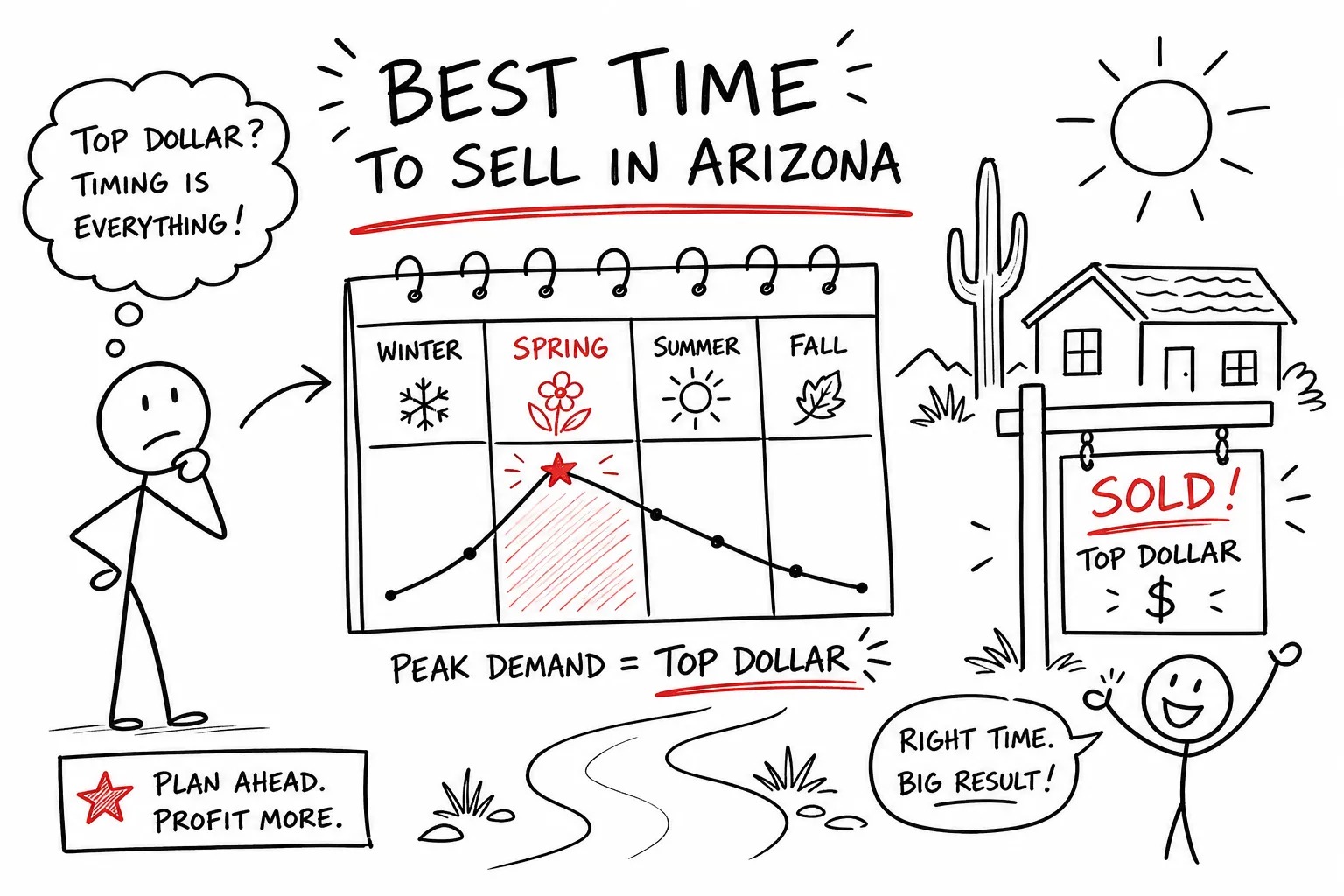
If you're wondering when to list home in Arizona, the answer isn't the same as it is for the rest of the country. Most real estate advice tells you to list in spring, get it on the market in April, catch the family buyers, close before summer. That calendar works well in other parts of the U.S. In Arizona, it misses the most lucrative selling windows entirely.
The calendar that drives this market operates on desert logic: snowbird arrivals, triple-digit summer heat, and a school year that starts in early August rather than after Labor Day. Getting the timing right on your Arizona listing can mean the difference between a quick, competitive sale and a home that sits through a brutal summer with price reductions. This guide breaks down Arizona's selling calendar quarter by quarter, covers the key differences between Tucson, Phoenix, and Scottsdale, and gives you a clear framework for choosing the right window based on your actual goal, whether that's speed or maximum price.
Why Arizona's selling timeline is nothing like the national average
The standard spring listing advice assumes buyers emerge in April, shop through May, and close before school starts. Arizona compresses and reshapes that entire cycle. Three forces drive this: extreme summer heat that suppresses showings from June through August, a massive snowbird influx that creates a demand surge in winter months few other markets experience, and an early school year that pushes families to close sooner than their counterparts in other states.
For context on the market's scale, Arizona was one of only 11 states above pre-pandemic inventory levels as of 2024. This is not a thin, illiquid market. It's a large, active one with distinct seasonal patterns that reward sellers who understand when to list home in Arizona and plan accordingly.
The desert heat factor most sellers underestimate
Triple-digit July temperatures send buyer activity off a cliff. In-person showing traffic drops sharply from June through August, and homes listed during that stretch accumulate days on market quickly. Phoenix metro DOM climbed from 55 days in March 2026 to 64 days by June 2026, a direct reflection of summer's toll on buyer activity. Listings that sit through a Tucson or Phoenix summer often face price reductions, which erodes negotiating leverage and signals weakness to buyers who do eventually engage.
How snowbirds flip the traditional off-season on its head
Arizona hosts between 300,000 and 400,000 seasonal residents each winter, with arrivals typically starting in mid-October, peaking through February and March, and departing by late April. This wave of retirees, second-home buyers, and investors creates a demand surge during the months that most markets consider dead. Combined with local family buyers who ramp up in spring, Arizona effectively gets two consecutive selling peaks rather than one, covering roughly November through May.
When to List Home in Arizona: What Buyer Demand Data Shows by Quarter
The quarterly data tells a clear story. Sellers who align their listings with buyer activity cycles tend to see faster sales, better offers, and stronger sale-to-list ratios. Here's what the numbers show for each window.
Q1 (January-March): the snowbird peak and its seller advantage
This is Arizona's strongest selling window by almost every measure. ARMLS data shows Q1 averages just 32 days on market compared to 38 days in Q2, with an average sale price of $572,000 versus $565,000 in Q2 and a sale-to-list ratio of 98.6%. Cash buyers make up a significant share of this window, roughly 25 to 30% of Phoenix-area sales close in all cash during winter months. These buyers are often operating on compressed visit schedules, touring multiple properties in a single weekend, and making fast decisions. Fewer contingencies and quicker closes are the norm.
Q2 (April-June): peak inventory and the family buyer surge
New listings flood the market in spring. Phoenix metro saw 9,363 new listings in May 2026 alone, among the highest monthly volumes of the year according to ARMLS reporting. More competition from other sellers exists in this window, but buyer demand is also at its broadest. Families with school-age children need to close before Arizona's early August school start, which creates genuine urgency. This deadline-driven demand makes April and May competitive, though sellers have to stand out in a crowded field rather than benefiting from thin supply.
Q3 (July-September): the summer slowdown and how to navigate it
Showing traffic drops, DOM climbs, and price reductions become common. Phoenix metro DOM hit 64 days by June 2026 and continued rising through the summer. Buyers who remain active in this window are highly motivated, often relocating for work or facing their own deadlines, and they frequently ask for closing cost credits or price flexibility. Listing in summer is not impossible, but it requires aggressive pricing from the start and realistic expectations about timeline.
Q4 (October-December): the underrated second window
As temperatures drop and snowbirds begin returning, inventory thins and serious buyers re-engage. Competition from other sellers eases significantly compared to the spring rush. This fall window is particularly underrated for sellers who missed the Q1-Q2 peak. It won't produce the same cash buyer concentration as January, but it delivers a meaningful improvement over summer in both DOM and buyer quality.
The Snowbird Effect: Why Winter Listings Outperform in Arizona
Few other U.S. markets experience this dynamic at the same scale. Arizona's winter buyer pool brings a specific type of demand that benefits certain properties enormously, and understanding that profile helps sellers position their homes to capture it.
Who these buyers are and why they move fast
Snowbird buyers are overwhelmingly retirees, second-home seekers, and investors, many paying cash and prioritizing convenience over price negotiation. They arrive for a week or two, schedule multiple showings in a single trip, and make decisions quickly because they're working against their own departure date. Investor activity in Scottsdale intensifies sharply between January and March, driving rental prices up and pushing more buyers toward ownership over renting. Fewer contingencies, faster timelines, and less back and forth make this buyer profile genuinely attractive for sellers.
Which property types benefit most from winter timing
Turnkey single-level homes, active adult community properties, and investment-grade rentals see the strongest demand bump from snowbird season. Low-maintenance desert landscaping, updated kitchens, and move-in ready condition are the features that resonate most with this buyer pool. Larger family homes in strong school districts, on the other hand, tend to perform better in Q2 when local family buyers are actively searching. Knowing which buyer drives demand for your specific property is part of matching your home to the right window.
When to List Home in Arizona: Does Your City Change the Timing?
Arizona's market is not monolithic. Scottsdale's median sat at $1.12 million as of March 2026. Phoenix metro single-family homes carried a median of $475,000. Tucson tracked at $349,900, essentially flat year-over-year. These aren't just price differences, they reflect entirely different buyer pools with different seasonal behaviors.
Scottsdale: luxury demand and the February peak
Scottsdale's luxury and second-home market concentrates heavily in Q1. Inventory for high-end homes spikes 35% between February and April as seasonal owners list before heading north, but the most motivated luxury buyers are active in January and February before that listing wave arrives. Late January often has relatively low competition and high buyer urgency in this segment. By March, supply increases and the leverage advantage begins to erode.
Phoenix: the broadest market with the most balanced timing
Phoenix, with its enormous buyer pool and wide price range, sees strong demand across both Q1 and Q2. March is typically the sweet spot where snowbird demand and family buyer demand overlap, creating the broadest competitive environment for sellers. DOM in the Phoenix metro ran 55 days in March 2026 and climbed steadily to 64 days by June, confirming that the window narrows as spring progresses. Sellers in the Phoenix market generally have more flexibility on timing but still benefit from listing before May.
Tucson: hyperlocal trends that change week by week
Tucson's market moves to its own rhythm, shaped by the University of Arizona calendar, a strong retiree buyer base, and neighborhood-by-neighborhood demand patterns that vary significantly across the metro. Median DOM in Tucson was 36 days in February 2026 and dropped to 29 days for closed sales in June, though active listings averaged 68 days as of that same month. The gap between those numbers tells the real story: homes priced and positioned correctly sell quickly, while overpriced or poorly timed listings sit. A local specialist who tracks these hyperlocal signals across Oro Valley, Marana, the Catalina Foothills, and Vail can help sellers identify the optimal listing week rather than defaulting to statewide averages.
Fast Sale vs. Highest Price: How to Match Your Goal to the Right Window
Knowing the calendar is only useful if you match it to what you actually need from the sale. The approach differs based on your priority.
If you need to sell quickly, target January through February
This window delivers the highest cash buyer concentration, the lowest seller competition, and some of the fastest DOM in the annual cycle. Buyers in this period are decisive and often operate without financing contingencies. There is a trade off: you may net slightly less than you would from a perfectly timed late-February listing, but you gain speed, certainty, and fewer complications.
If you want the highest possible price, aim for late February through March
This is where snowbird demand and family buyer demand converge into a single competitive window. More buyers chasing the same inventory pushes sale-to-list ratios up and gives sellers meaningful negotiating leverage. The catch is preparation: to list in late February, you need to begin repairs, staging, and pricing strategy in December or early January. Arriving at that peak window market-ready is what converts timing into results.
Preparing Your Home to List at the Right Moment, Not Just the Right Month
Knowing the best window means nothing if you show up unprepared. A six-week pre-listing process ensures you're ready to capitalize on the timing rather than scrambling to catch it.
The six-week pre-listing checklist for Arizona sellers
- Weeks 1-2, Repairs and touch-ups: Fix anything a buyer's inspector will flag, repaint where needed, and address any deferred maintenance that could invite a price reduction request.
- Week 3, Photography and staging: Schedule professional photography, virtual tours, and staging. In Arizona, this often means refreshing desert landscaping to maximize curb appeal.
- Weeks 4-5, MLS prep and pricing strategy: Use current comparable sales in your specific neighborhood, not zip code averages, to land on a defensible list price.
- Week 6, Listing day execution: Coordinate showings, open house scheduling, and offer review logistics so nothing delays a strong buyer's momentum.
Why local market data matters more than general advice
A seller in Vail faces a different buyer pool, different competition level, and a different optimal listing week than one in the Catalina Foothills or Marana. Statewide timing guides, including this one, provide the framework. What converts that framework into an actual sale price is hyperlocal knowledge: which streets in your neighborhood have moved recently, what buyers in your price range are prioritizing right now, and where your home sits relative to current competition. That's the level of analysis that separates a good outcome from a great one.
Putting It All Together: When to List Home in Arizona for Your Sale
Arizona's best selling window runs from November through March. Q1 delivers the fastest sales and the strongest cash buyer presence. The late February through March overlap of snowbird and family demand produces the most competitive buyer environment. Summer listings are possible but require aggressive pricing and patience. City context matters: Scottsdale peaks earliest in the luxury segment, Phoenix's broad market peaks in March, and Tucson's neighborhood-specific rhythms reward sellers who have a local expert in their corner.
That kind of precision starts with knowing exactly where your home stands in the current market. If you're a Tucson-area homeowner thinking about listing this cycle, I offer a free home valuation on win3team.com that gives you a clear, data-backed picture of your property's value right now, so you can plan your timing around real numbers rather than guesswork. I bring hyperlocal knowledge of Tucson's distinct neighborhoods that statewide averages simply can't provide. Reach out before the next peak window opens so you're positioned to meet it market-ready, not scrambling to catch up.
Categories
Recent Posts








GET MORE INFORMATION