
11 First-Time Homebuyer Mistakes You Can't Afford to Make
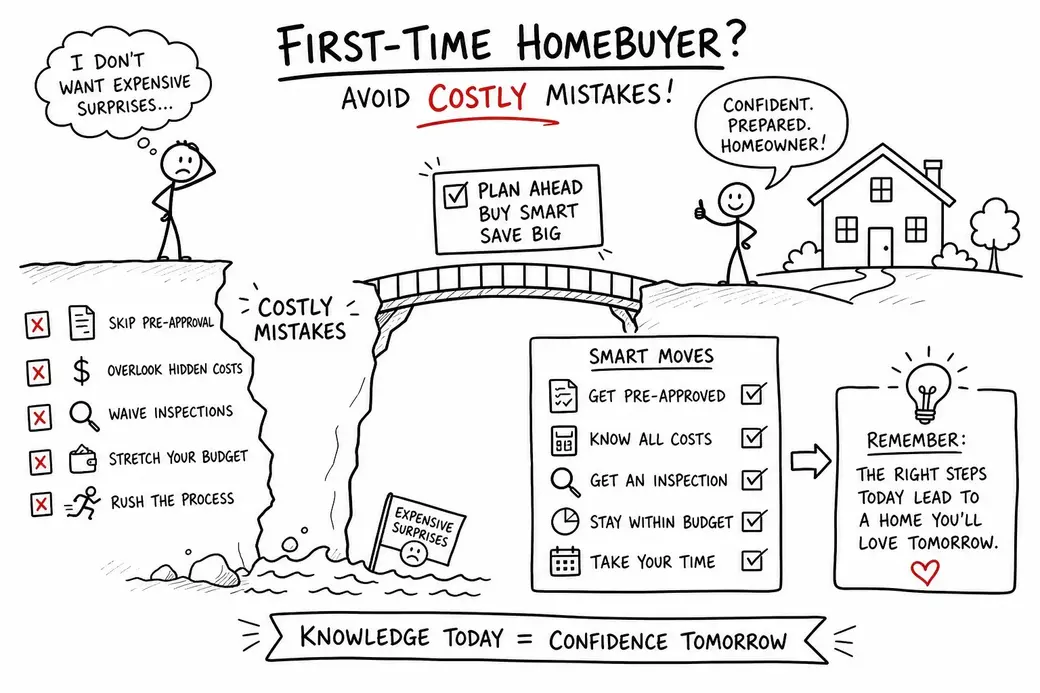
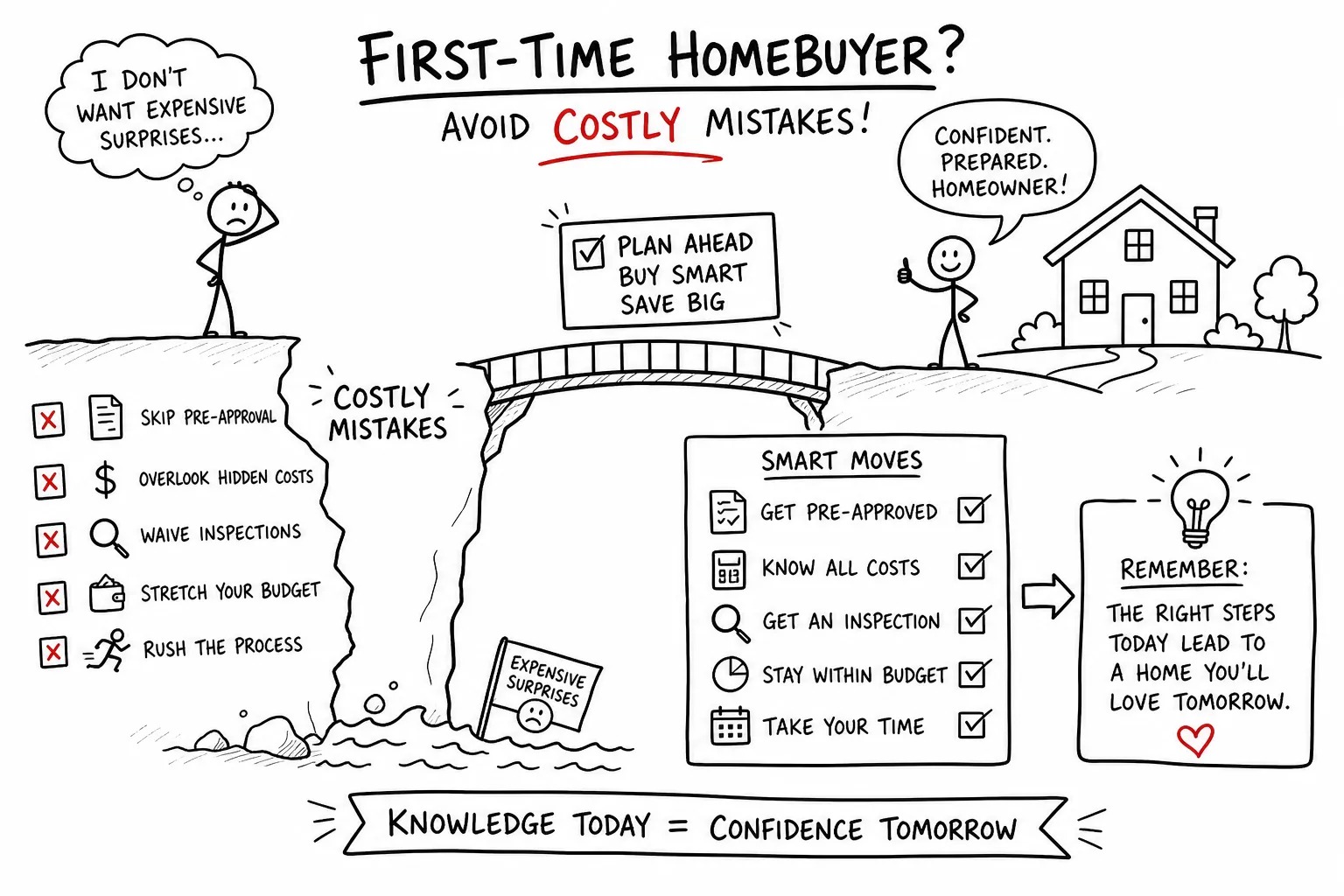
Buying your first home is one of the biggest financial decisions you'll ever make, and the most common first time home buyer mistakes don't come from carelessness. They come from a process that's genuinely complex, moves fast, and involves financial decisions most people have never faced before. Knowing what these mistakes look like, and what they actually cost, is the first step to avoiding them.
Picture this: a couple in Tucson spends three weeks falling in love with a four bedroom home, makes an aggressive offer, and wins. Sixty days later, they're sitting in their new living room staring at a $14,000 HVAC estimate and a $9,000 electrical repair quote the inspector had flagged, but they'd waived the contingency to close fast. The home was still worth buying. The surprise repair bills weren't something they had to accept blindly.
Stories like that are commonly reported by agents across the country. Not because buyers are careless, but because the process sets up these traps for the unprepared. I've worked with many first time buyers through these exact situations here in Tucson and Southern Arizona, and the pattern is always the same. The buyers who come out ahead are the ones who saw these pitfalls coming.
Here are 11 specific mistakes, the real financial stakes behind each one, and exactly what to do instead. Think of it as your first time buyer checklist for what not to do.
Top First Time Home Buyer Mistakes: Pre Approval and Knowing the Difference
1 and 2. Starting your search before getting pre approved, and confusing it with pre qualification
A pre approval letter is not a formality. In a competitive market, it's your entry ticket. Sellers and listing agents routinely ignore or outright reject offers that arrive without one, and many buyer's agents won't show properties to buyers who haven't completed the process yet. First time buyers who skip this step often lose homes they were fully qualified to purchase, simply because they didn't have the paperwork ready.
Pre approval means a lender has pulled your credit, verified your income, employment history, and existing debt, and issued a letter stating how much they'll lend you. That's different from pre qualification, which is a rough estimate based on self reported information. Pre qualification is typically quick and informal; pre approval requires documentation, usually takes a few business days, and tells both you and the seller that you're a serious, verified buyer.
Knowing your real number before you start touring homes also protects you from spending emotional energy on properties you can't actually afford.
Common Homebuying Mistakes Around the True Cost of Ownership
3 and 4. Underestimating what buying a home actually costs
Most first time buyers budget for the down payment and stop there. That's the number one reason closing day feels like a financial ambush.
Closing costs alone run 2 to 5 percent of the purchase price. On a $300,000 home, that's $6,000 to $15,000 due at the table, separate from your down payment. Add homeowner's insurance, prepaid property taxes (often escrowed upfront), HOA fees if applicable, and moving expenses, and the total cash requirement looks very different from what buyers initially planned for.
The first year of ownership carries its own surprise costs. Homeowners should generally budget 1 to 4 percent of the home's value annually for maintenance and repairs. In year one, especially with older homes, that number often runs higher. Buyers who drain every dollar of savings to hit a larger down payment and avoid private mortgage insurance end up with zero financial cushion when the water heater goes or the roof starts leaking. Plan those reserves before you close, not after you're stuck.
5 and 6. Letting your emotions overrule your financial limits
Getting pre approved for a maximum loan amount doesn't mean you should borrow all of it. A lender's approval reflects the highest debt to income ratio they'll accept under their guidelines, not what's comfortable for your actual life. Buyers who borrow at the ceiling often end up house poor: technically homeowners, but with no room for travel, savings, retirement contributions, or any financial emergency.
Many financial advisors recommend keeping your DTI below 36 percent. Some lenders, following FHA or conventional loan guidelines, will approve you up to 43 to 50 percent, but their willingness to lend shouldn't dictate your decision.
Competitive markets also create pressure that leads to rushed, emotionally driven offers. When a buyer falls in love with a home and fears losing it, they sometimes overbid far beyond comparable sales or skip due diligence to move faster. This is one of the clearest rookie errors an experienced agent helps prevent.
Knowing when to walk away from a home you're emotionally attached to is one of the most valuable skills in the process. A great agent gives you the market data to make that call confidently, rather than from fear of missing out.
First Time Home Buyer Mistakes That Happen at the Inspection
7 and 8. Skipping the inspection or waiving the contingency
A standard home inspection costs $300 to $500. The issues inspectors regularly uncover cost far more to fix. Foundation problems average $5,000 to $15,000. Roof replacement runs $8,000 to $15,000. Electrical rewiring can reach $20,000 or more. Termite damage repairs have been quoted as high as $37,500.
These are not rare edge cases. Structural defects, outdated wiring, plumbing failures, mold, pest damage, and HVAC systems at the end of their service life show up in inspections regularly, and none of them are visible during a casual showing.
In hot bidding wars, some buyers waive the inspection contingency entirely to make their offer more attractive. This is one of the most dangerous home purchase mistakes you can make, but there are alternatives worth knowing. Consider an informational inspection: you pay for the inspection out of pocket, it doesn't create a formal contingency, but you still know exactly what you're buying before you're locked in. Note that the availability and legal effect of an informational inspection can vary by contract language, so talk through the approach with your agent and, if needed, your attorney before proceeding.
If something significant shows up, you can negotiate, walk, or proceed with full awareness. Skipping the inspection entirely means handing over that knowledge and accepting whatever comes after closing.
First time buyer checklist: Inspection red flags to watch for
- Foundation cracks or settling
- Roof age and visible wear
- Electrical panel age and breaker condition
- HVAC system age and service records
- Plumbing material and water pressure
- Signs of moisture intrusion or mold
- Evidence of pest activity
More First Time Home Buyer Mistakes: Credit and Mortgage Shopping
9 and 10. Ignoring your credit score and accepting the first mortgage offer
Your credit score has a direct, dollar for dollar impact on your mortgage rate. A score of 620 qualifies you for a conventional loan, but the rate you receive at 620 is meaningfully higher than what you'd get at 740 or above. That gap can translate to $150 or more per month in additional payment. Over a 30 year term, that difference compounds into tens of thousands of dollars.
Reviewing your credit report, disputing errors, and paying down high balance accounts before you apply is one of the highest return moves you can make before starting the process.
Once you're ready to apply, compare at least three lenders before choosing a loan. Many first time buyers accept the first quote they receive, often from their personal bank, without realizing that rates, origination fees, and loan structures vary considerably between lenders. Getting just one additional quote beyond the first can save buyers an average of $1,500 over the loan's life; getting five quotes saves roughly $3,000.
FHA loans, conventional loans, VA loans for eligible buyers, and state specific assistance programs all carry different credit and DTI requirements. An experienced agent can point you toward the right loan type for your situation and connect you with lenders who specialize in it.
11. Going through the process without an experienced advocate
A knowledgeable buyer's agent does far more than open doors. They filter out overpriced listings, flag inspection red flags before you write an offer, negotiate repair credits after the inspection, and keep your offer strategy calibrated to what the market actually supports.
For first time buyers especially, having an agent who has worked through a high volume of transactions means having someone who recognizes these financial mistakes in real time and redirects you before you're locked into a costly decision. Market experience and local knowledge change outcomes in ways that are hard to quantify until you're in a negotiation.
As part of the WIN3 Team at EPIQUE Realty, I bring hands on experience across Tucson and Southern Arizona, markets with their own dynamics, price points, and competitive conditions, and that means I've seen nearly every first time homebuyer pitfall play out in real transactions. Whether you're navigating a bidding war or buying your first home in a quieter Tucson neighborhood, you want someone beside you who treats your purchase the way they'd treat their own.
The Bottom Line
First time home buyer mistakes are rarely the result of carelessness. They happen because the stakes are high, the timeline is tight, and most of the decisions involved are genuinely new territory. But every mistake on this list is preventable with the right preparation and the right team beside you.
Get pre approved before you tour a single home. Budget for the full cost of ownership, not just the down payment. Never skip the inspection. Address credit issues before you apply, and compare multiple loan offers before you commit. These are the common homebuying mistakes that consistently cost buyers the most, and they're all avoidable.
Don't go through any of it alone. The buyers who finish their first purchase feeling protected and confident are almost always the ones who had an experienced advocate with them from the first showing to closing day.
Ready to buy your first home in Tucson or Southern Arizona? I'm here to guide you through every step, with the local expertise and hands on support that turns a stressful process into a clear, confident one. Call, text, or fill out the contact form on win3team.com to schedule your free buyer consultation, and start your search the right way.
Categories
Recent Posts







GET MORE INFORMATION